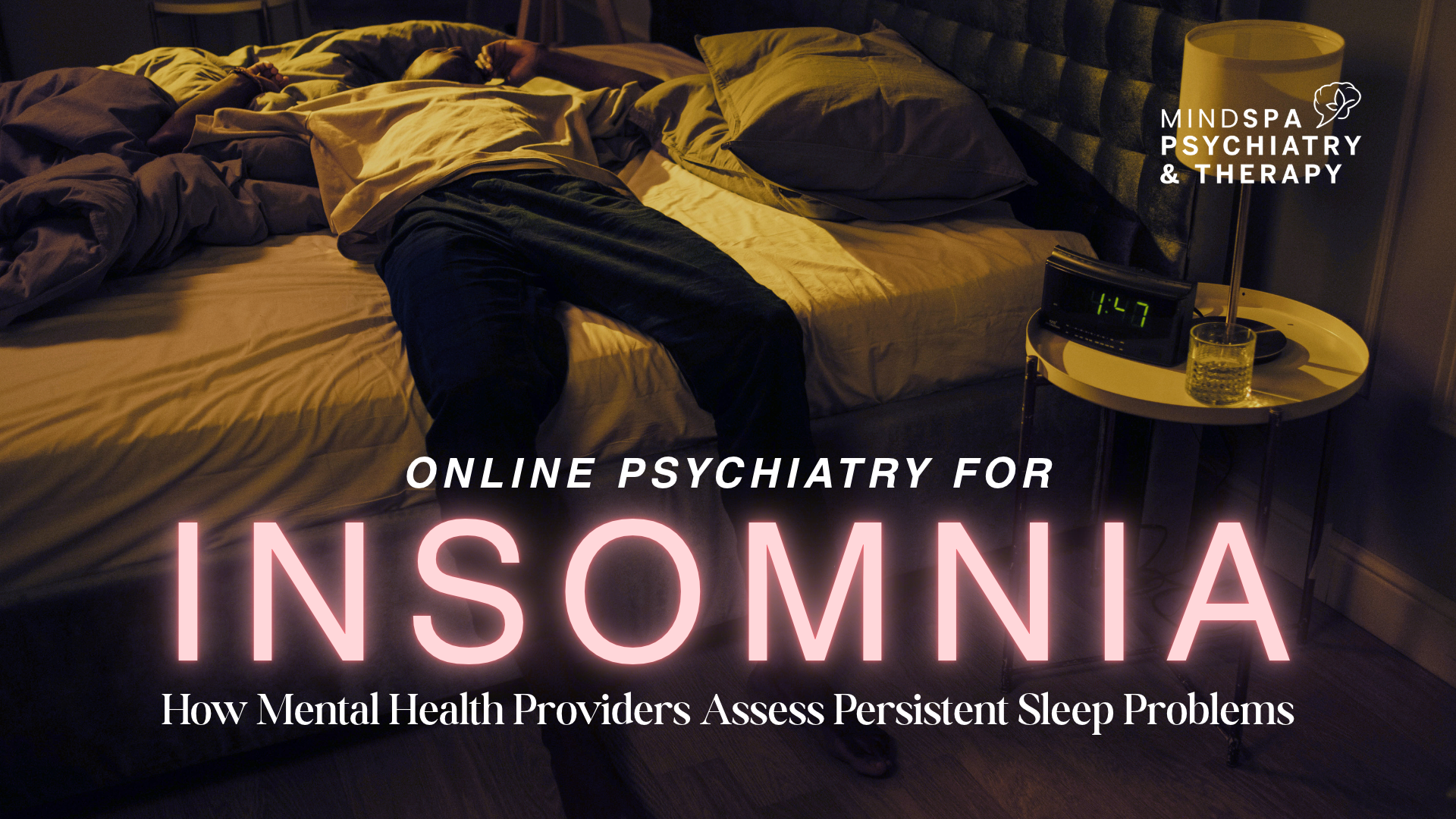
One bad night is easy to shrug off. Weeks of lying awake, or waking in the early hours and not drifting back, are harder to ignore, especially when your mood, focus, and patience start to suffer. If sleep trouble has become part of your routine, a psychiatric evaluation can help clarify what is going on.
Your provider will discuss your sleep routine, mood, medications, and how poor sleep affects your daily life. This helps us understand your concerns and determine the next steps, including whether further in-person evaluation may be needed. At MindSpa, we provide secure video psychiatry visits for adults across Florida.
When a Sleep Problem Is Worth a Closer Look
Insomnia may be diagnosed when a person has difficulty falling or staying asleep at least three nights a week, and it is considered chronic when this continues for three months or longer.
It may be time to book an evaluation if:
- Sleep trouble happens most nights and has lasted weeks or months
- Tiredness, low mood, or worry is spilling into your work or relationships
- You dread bedtime because you expect another restless night
What a Psychiatric Provider May Assess
There is no single test for insomnia. A provider builds the picture through conversation, and each topic below has a purpose.
Sleep patterns
A provider may ask how often you have trouble sleeping and for how long, when you go to bed and get up on workdays and days off, how long it takes you to fall asleep, how often you wake at night, and how refreshed you feel in the morning.
Why it matters: The pattern helps show whether the main problem is falling asleep, staying asleep, or waking too early.
Helpful to bring: Keep a sleep diary for one to two weeks before your visit, noting when you go to sleep, wake, and nap, how sleepy you feel during the day, and when you have caffeine, alcohol, or exercise.
Mood
Low mood, irritability, and loss of interest often show up alongside poor sleep. A provider may ask which symptoms you notice, how long they have been present, and whether they started before or after the sleep trouble.
Why it matters: Sleep and mood can affect each other, so the order of events can help a provider understand what to look at first. Mention any stretches when you slept much less than usual and still felt unusually energetic or active. A reduced need for sleep sometimes occurs during a mood episode.
Anxiety
Racing thoughts at bedtime, a body that feels "on alert," and worry about not sleeping are common themes. Stress, worrying about whether you will get enough sleep, and watching the clock can raise the risk of insomnia or make it worse.
Why it matters: A provider can explore whether worry is keeping you awake, whether sleep loss is feeding the worry, or both.
Medication and substance history
Providers may ask whether you take any medicines, have new or long-standing health problems, are pregnant or going through menopause, or use caffeine, nicotine, alcohol, or other drugs.
Why it matters: What you take, and when you take it, can be part of the sleep picture. Bring a complete list of prescriptions, over-the-counter products, and supplements so nothing is missed.
Daytime functioning
Diagnosis also considers daytime effects, such as fatigue or difficulty concentrating, paying attention, and remembering.
Why it matters: How sleep trouble affects your work, relationships, and mood shows what it is costing you day to day, and it helps shape the conversation about next steps.
Why the Mental Health Side Deserves Attention
Sleep problems and psychiatric symptoms often appear together. Sleep difficulties sometimes continue even when my mood improves. If you’re still lying awake after the stress that started it has eased, tell your provider. Your sleep may need attention of its own.
What an Online Visit Looks Like
- Reach out: We start the process with a short intake form, followed by a call from the intake team to find a time that suits you.
- Confirm: A confirmation call helps you get ready for your first session.
- Meet your provider: Visits take place over private, encrypted video from anywhere in Florida.
Before your visit, gather your sleep diary, your medication list, and a few notes on how sleep trouble is affecting your days.
When Other Medical Causes Need Evaluation
Not every sleep problem is psychiatric, and a thoughtful provider keeps that in mind.
- Breathing-related clues: Providers may ask whether you snore loudly and often, or wake up gasping or short of breath.
- Further testing: A sleep study can look for other sleep problems such as sleep apnea, circadian rhythm disorders, and narcolepsy. Actigraphy uses a small wrist sensor worn for 3 to 14 days, and blood tests can check for thyroid problems or other conditions that affect sleep.
- Other contributors: MindSpa lists conditions such as chronic pain, restless legs syndrome, and heart failure among the underlying causes that can disrupt sleep.
If something like this is suspected, a provider may recommend further evaluation or a referral. To read more about the difference between insomnia and sleep apnea.
How Psychiatry and Therapy Can Fit Together
Some people find it helpful to have both a psychiatric evaluation and talk therapy, especially when stress, anxiety, or low mood are part of the picture. Each service has its own role. MindSpa's therapy team is a separate service that you can discuss with your care team.
Where Care Is Available
MindSpa's providers see adults by secure video visit across Florida, and its offices are open Monday to Friday, 9:00 AM to 5:30 PM. Choose your nearest location:
If sleep trouble has gone on long enough to affect your days, you do not have to sort it out alone. Request an appointment or call 561-576-9404.
This article is for general education and is not a substitute for medical advice. If you are in crisis or having thoughts of harming yourself, call or text 988 or go to your nearest emergency room.
FAQ’s
Can a psychiatric provider assess insomnia online?
Yes. A provider can take a detailed history by video, covering sleep patterns, mood, anxiety, and medications. If they suspect another cause, they may recommend in-person testing or a referral.
Do I need to sleep study?
Not always. A sleep study looks for other sleep problems, such as sleep apnea, and whether you need one depends on your symptoms.
What should I bring to my first visit?
A sleep diary, a list of your medications and supplements, and a few notes on how sleep affects your days.
How is persistent insomnia different from stress-related poor sleep?
Short-term stress can disrupt sleep for a few nights. Insomnia involves trouble sleeping at least three nights a week, and it is considered chronic at three months or longer.