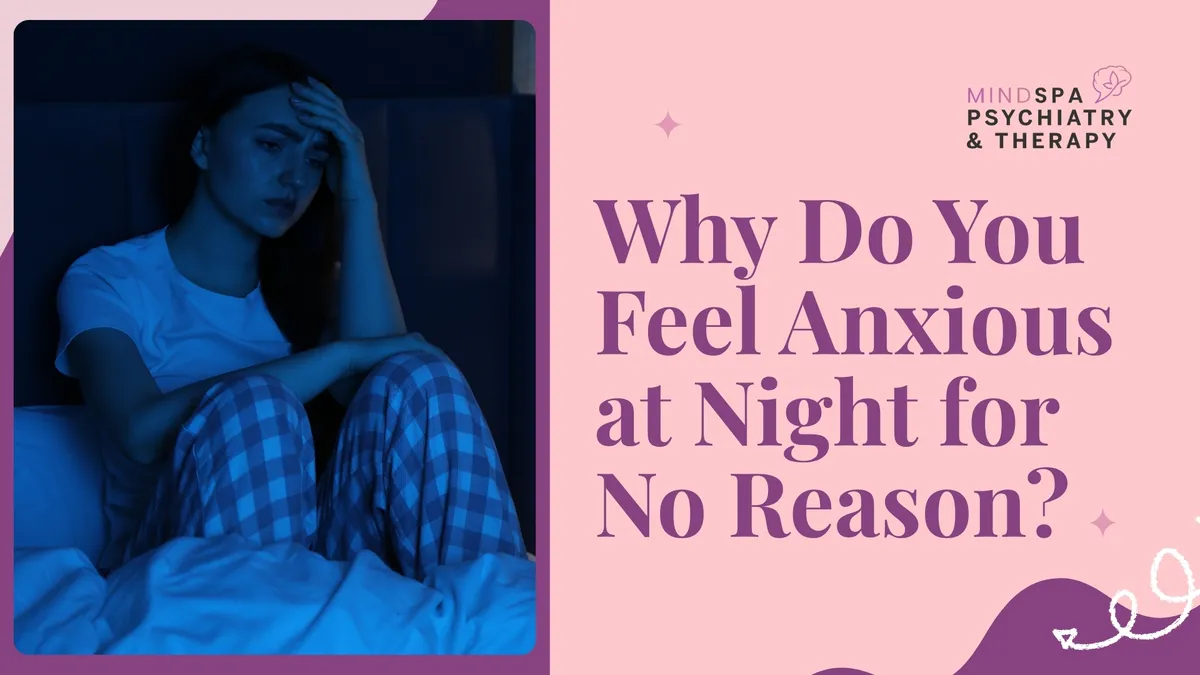
Nighttime panic attacks are also known as nocturnal panic attacks. These can occur without any reason and wake you up from sleep. When you have daytime panic attacks, you sweat or sometimes breathe heavily.
Sometimes, you feel chilled or lightheaded. These shocking symptoms can also lead to heart attacks or other serious medical conditions. The panic attacks are not comfortable, but they are not dangerous either.
And, as for the nighttime attacks, they usually last only a few minutes. But it takes a while to calm down and go back to sleep when you have one. People who get nighttime attacks also tend to have daytime panic attacks. So, let’s find out why it happens and what you can do to manage it so that it can bring relief and help you relax.
What Causes Anxiety at Night
Anxiety is the body’s natural response to stress or threats. It is a heightened state of alertness that protects you from danger. However, when anxiety becomes severe or arises without any reason, it can create disturbances in your daily life. Nighttime anxiety refers to increased worry, uneasiness, or fear that you experience during the evening or bedtime hours.
Anxiety itself is a natural response to stress or danger. However, nighttime anxiety can feel particularly intense because it usually occurs during a quiet part of the day when you are supposed to be resting. Some of the common symptoms include:
- Negative thoughts
- Waking up with a fast heart rate
- Tight muscles
- An inability to relax
Some people continuously replay the day’s events, which makes it more difficult for them to fall asleep. According to a study published by BMJ Journals, people feel happiest in the morning and experience increased sadness or anxiety at night.
Here is How to Regain Your Focus When Your Mind Feels Foggy
What To Know About Sleep Physiology
Studies show that human sleep is made up of different stages that involve changes in brain activity and body functions. So, here are the main types of sleep:
Non-Rapid Eye Movement Sleep
NREM sleep is divided into four stages.
- Stage 1: Light sleep, when you begin to fall asleep.
- Stage 2: A deeper stage, but still it’s not the deepest.
- Stages 3 and 4: These are the deepest stages of sleep.
Usually, stages 3 and 4 are grouped together, and these are known as slow-wave sleep (SWS) and delta sleep. Slow brain waves are seen during that time.
Rapid Eye Movement Sleep
REM sleep is different from NREM sleep. It is also known as paradoxical sleep because the brain activity looks the same as when you are awake. Also, the body’s muscles are paralyzed or inactive. The condition makes it look like the brain is active, but the body is deeply asleep.
Your sleep does not stay in one stage all night. Instead, there are some repetitive patterns. Each cycle lasts about 90 minutes, and it includes both NREM and REM sleep patterns. During the night, deep sleep becomes shorter, REM sleep becomes longer, and REM periods later in the night have more eye movement activity.
How Is The Sleep Regulated
Your sleep and wakefulness are controlled by two main processes that work together.
Homeostatic Process (Process S)
It is related to sleep pressure. The longer you stay awake, the stronger you need to sleep. It can happen due to a substance building up in the brain, and adenosine is one of the main substances involved.
Circadian Process (Process C)
The process is your internal body clock that controls when you feel sleepy or alert during the day. It is located in the part of the brain known as the suprachiasmatic nucleus.
Your sleep patterns usually depend on how these two processes work together. Process S increases the requirement for sleep, and Process C controls the times.
Check out How to Improve Your Sleep and Wake Up Feeling Refreshed
How Are Stress, Anxiety, and Sleep Connected
Anxiety is a normal human emotion, and it helps us respond to danger or stressful events. Without it, the situation becomes worse. There are two main types of anxiety:
- Temporary Anxiety
It is also known as state anxiety. The condition happens in response to a specific situation, like a deadline, exam, or problem. It usually goes away when the situation is over.
- Long-Term Anxiety
The trait anxiety happens when a person feels anxious more often, even without a clear reason. It can happen due to personality, past experiences, or long-term stress.
Sometimes anxiety becomes a real problem when the fear is not clear or does not match the situation. It continues even when there is no real threat. In both of these severe cases, anxiety increases alertness that can disturb your sleep.
What Happens in the Body During Stress
When you feel stressed, your body activates a high-alert system that helps you deal with the situation. Usually, two important systems are involved, which include:
- A hormone system that releases stress hormones
- A nervous system response that increases activeness or alertness
These systems can be a savior in real danger because they keep you awake and focused. They also prepare your body to react quickly.
Why Stress Can Turn Into Anxiety
Your brain has a loop that handles stress. So, how does it work? Stress increases alertness, and alertness makes you think more. When you think more, it can increase worry, and worry can create more stress. The loop continues even if you are not in a stressful situation. Over time, it can cause ongoing anxiety, constant thinking, and difficulty relaxing.
How Stress Affects Sleep
Stress leaves a strong effect on sleep, especially if it is frequent or long-lasting. The short-term stress makes it difficult to fall asleep and increases mental activity during the night. However, long-term stress disrupts sleeping patterns, reduces deep sleep, increases lighter sleep, and even causes frequent awakenings.
Learn Why You Feel Exhausted All the Time Even After Sleeping Well
What Happens In Your Body During Night
Your body follows a natural rhythm when you are sleeping. When it’s early in the night, deep sleep is higher, and the body feels more relaxed. However, when it’s late at night, your dream sleep increases, and brain activity becomes higher. At the same time, your stress hormone activity level is low in deep sleep, and it increases again in the morning.
If your stress system is overactive, then it can keep your brain alert at night, increase unnecessary thoughts and worries, and make anxiety feel stronger when you try to fall asleep.
Why Anxiety Feels Worse at Night
If you put everything together. Your body gets tired, but your brain is still active. There are fewer distractions, so your thoughts become louder. Your deep sleep is shortened, which makes it harder for you to fully relax. That’s why most people experience overthinking during bedtime, uncontrolled thoughts, and sudden feelings of worry or fear.
Sleep problems are very common in people with anxiety. Most people struggle to fall asleep, and when they don’t sleep, it makes the anxiety even worse the next day, which creates the cycle.
Anxiety→Poor Sleep →More Anxiety
Final Thoughts
There are various reasons that make your anxiety worse at night. Your daily stress, poor sleeping habits, and other health conditions can cause increased anxiety, and you even suffer from panic attacks at night. However, with a good and healthy lifestyle, meditation, and the right therapy sessions, you can talk about your symptoms to reduce your burden. If these symptoms are affecting your sleep or daily life, speaking with a professional can help. You don’t have to manage it alone. Call us at 561-327-1476 to book an appointment.