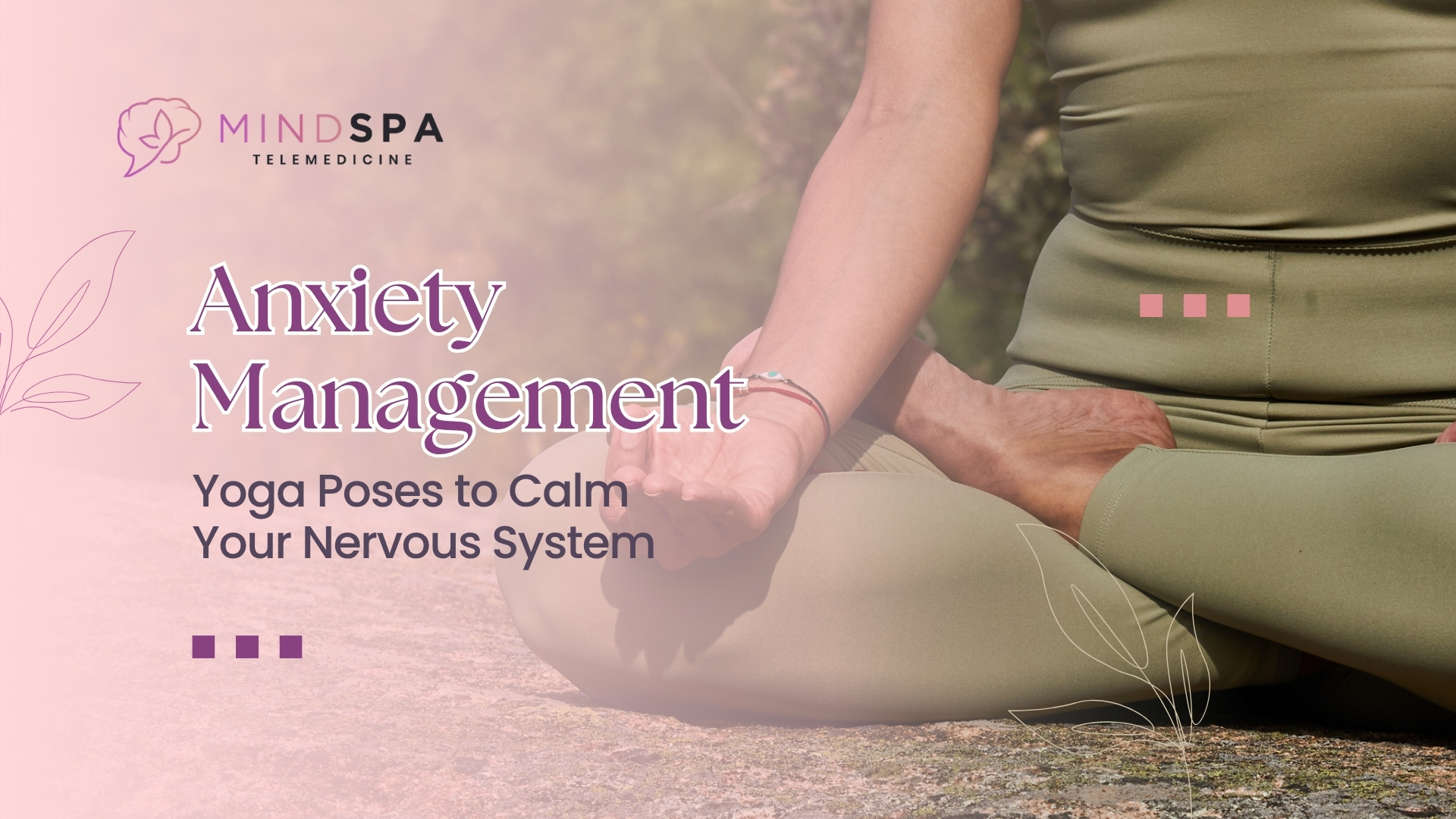
Anxiety is not occasional stress. It is that racing heart, tight chest, jittery thoughts and the incessant idea that something will go wrong. However, your nervous system is a powerful reset button on your body. Yoga is one of the most natural and evidence-based means to relax.
Yoga is known to act directly on the vagus nerve, which is the component of your body that governs the rest and digest process. Its stimulation decreases the level of cortisol, reduces the heart rate, calms muscle, and silences the mind. You do not need to hunch forward into complicated poses to alleviate yourself.
In this blog, we will discuss yoga, one of the most gentle and useful methods of managing anxiety.
How Yoga Helps Anxiety
Yoga does not merely make you feel more relaxed, but it is a process of rewiring the responses to stress in both your brain and your body:
- Lowers muscle tension: Anxiety is in the body as in the mind.
- Enhances sleep: Natural restorative sleep fights panic.
- Balances breathing: Deep, slow breathing decreases anxiety messages in the brain.
- Becomes more aware: Thinks less and lives more in the moment.
5 Yoga Styles to Calm Your Nervous System
1. Child’s Pose
A doorway into instant emotional comfort. This position signals safety to your brain.
Sit on your heels and gently kneel down. Bend down till your forehead is in contact with the mat. Move your arms forward or lay them by your side. Take a deep breath into your belly and relax your body fully.
Benefits – Slows down the heart rate and relaxes the shoulders.
2. Gentle Camel Pose
When anxiety makes your chest feel tight, opening the heart space helps.
Get on the floor, with your hands touching your lower back. Tilt your neck and your upper body slightly backwards, but without straining. Breathe in full with your chest, pause, and fall softly to the upright.
Benefits – The trapped tension is removed, and the diaphragm is open and breathing easier.
3. Viparita Karani
Among the most calming poses to perform during a panic or a feeling of being overwhelmed.
Lean up against a wall, and lie on the ground with your legs pressed against the wall. Keep your arms down, palm open. Lie with your back against the ground with closed eyes and breathe for a few minutes.
Benefits – Stimulates blood flow, reduces nervous system, reduces insomnia, and anxiety attacks.
4. Bridge Pose
Activates the relaxation of the brain circuits and at the same time decreases the stress that has been accumulated in the hips.
Lie on your back with knees folded and feet apart. Place your feet to the floor and propel your hips upwards. Keep your shoulders and your arms equally pulled down to the floor, and rest a few breaths and then sink down your hips.
Benefits – It will help you breathe better, relieve tension in lower body parts and help you feel better.
5. Cat-Cow Stretch
A breathing and body syncing meditation.
Start on your hands and knees. Inhale while arching your back and lifting your head for Cow Pose, then exhale while rounding your spine and tucking your chin for Cat Pose. Continue moving gently with each breath.
Benefits – Relaxes the spine, enhances breathing capacity, and stops the mental chatter.
Breathing Practices You Can Combine with These Poses in Yoga
4-4-6 Breathing
- Inhale 4 seconds
- Hold 4 seconds
- Exhale 6 seconds
When you exhale longer, the brain knows that you are safe.
Alternate Nostril Breathing
Balances the sides of the brain and decreases overthinking.
Create Your 7-Minute Anti-Anxiety Yoga Routine
You don’t need 60 minutes. Here’s a short daily plan:
- 1 min: Cat-cow
- 1 min: Child’s pose
- 1 min: Gentle camel variation
- 1 min: Bridge pose
- 2 min: Legs up the wall
- 1 min: Deep breathing in Shavasana
Do this every morning or whenever anxiety spikes.
Signs Your Nervous System Is Calming Down
When your nervous system starts to relax, your body feels lighter. Your breath slows, and your mind becomes calmer. Small changes show big healing. These signs remind you that peace isn’t forced, it’s something your body naturally returns to.
After yoga, you may notice:
- Shoulders dropping
- Slower heartbeat
- A natural sigh or deep breath
- Quieter thoughts
- A sense of safety in your body
- Less pressure in your chest
- Less urge to fix everything at once
These are indicators that your parasympathetic nervous system is turning ON.
Indications of When to Seek Help
Yoga is so helpful, yet anxiety is not always superficial as it can be deep rooted and only addressed by breathing and positioning the body. Seek professional assistance when you feel:
- Panic attacks
- Difficulty functioning daily
- Sleep disruption for weeks
- Constant anxiety that is beyond control.
- Physical symptoms such as chest pains, dizziness, or numbness.
- Emotional exhaustion
Support is a strength, not a setback.
Calm Begins Here — Take the First Step at MindSpa Psychiatry & Therapy
Relax, communicate, and get in control at MindSpa Psychiatry & Therapy, where evidence-based care comes with actual compassion. Get customized mental care, specialized treatment approaches, and more complex neurological evaluations -all in a secure telehealth setting.
TOVA test, which is best to learn about attention, anxiety, impulsivity and mental fatigue, can be done at the Boynton Beach place.
Step out of overwhelm and into calm, balance, and confidence. Your journey to peace starts here!
Frequently Asked Questions
Does yoga substitute anxiety medication?
Yoga is able to aid in anxiety treatment although it must not be used in place of medicine unless suggested by your physician.
What kind of yoga is the most effective with anxiety?
The best are restorative yoga, Yin yoga, and slow Hatha which do not stimulate the nervous system as opposed to foreground yoga.
Is it possible to practice anxiety-relief yoga by beginners?
Yes. These are simple yoga postures that do not require flexibility or experience.
Is yoga effective in panic attacks?
Yes. The breathing exercises, including the 4-4-6 breath and the Legs Up-the-Wall Pose, are to be offered, particularly when it comes to grounding.
Can I do these yoga poses every day?
Yes, you can safely practice these gentle yoga poses daily. Regular practice helps calm your mind and keeps your nervous system balanced over time.